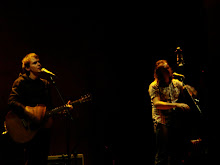
A lot has been made of the recent popularity of say, Elbow, but such bands owe a great deal of their success to hirsute Mancunian colleagues, Doves.
I was standing watching a band the other night when a friend turned to me and asked a somewhat surprising question.
‘How many times this week have you been called a faggot?’ she said.
A curious question to be sure, so I laughed at first, not quite knowing how to respond. I then realised I haven’t been called a faggot even once this week. Come to think of it, I haven’t been called a faggot in years.
I asked her why she would ask such a question. She pointed to a mutual friend standing next to her, a friend who has only recently moved to Preston.
It turns out that since his arrival, this friend of mine has rediscovered the insult – or I should say, it has rediscovered him. It turns out that what he thought he had left behind in the streets and schoolyards of Brisbane is actually very much alive and well in Preston. His current route home from work passes by the local school and each day he is hailed a faggot. It’s hard to know why, but perhaps due to the fact he’s wearing jeans and a button up shirt. He always was a fancy-boy, what with his jeans and his shirts.
Thankfully, with the passing of time those words no longer carry much weight and we all had a laugh about it. But it did get me thinking about the word itself and the role it has played in my life.
I spent a decade in Perth, when being called a faggot was a daily event: on the train, on the bus, outside clubs and inside clubs, on the road, and even down at the beach. You didn’t have to go far to discover the rich vein of bigotry that ran through the northern suburbs of Perth. You could always count on a toothy sneer from a muscle-bound jock, or cop vomit-laced expletives from a skinny-jeaned bogan. Hell, even a dread-locked surfer half submerged in his own bong water would often feel the need to cast judgement.
To make matters worse, people often thought I was a girl. Strangely, this never stopped me being called a faggot. Their mistake was understandable. I admit I was somewhat effeminate in my late teens: I didn’t begin shaving regularly until I was over twenty; I was never much of a sportsman, and I am also the not-so-proud owner of a very high voice. I wasn’t pretty either, more like a stick-thin plain Jane with long greasy hair.
My girlfriend at the time and I would often be mistaken for girls. It was always, ‘hi girls,’ or ‘thanks ladies’ as we marched out of the bottle shop with a night’s worth of Real McCoy Whiskey under our arms. Hard as I tried to look tough, it failed to work. It didn’t matter that I was buying whiskey and smoking Marlboro Reds, I was never going to cut it as a man’s man.
I did my best to make light of it, but there were complications. If I was a woman, that made my girlfriend gay, and she therefore fell victim to the accompanying judgement and taunts. At these times, it was clear she was a faggot because she was going out with me. If I were foolish enough, however, to point out that I was a guy and this here was my girlfriend, I would be called a faggot for pretending to be a woman. It’s confusing, I know!
One time a man came up to me at a bar and asked if he could buy me a drink. I declined, telling him that I wasn’t into guys. His response was,
‘So you’re a fucking lesbian?’
‘No,’ I said making my voice as deep as possible, ‘I’m a guy’.
His arms, which had been draped all over me a moment earlier, were quickly pulled back, and with a face twisted by anger and alcohol, he called me a faggot. Yes, that’s right. The innocent victim of his attempted romance, was a faggot for firstly - not being a woman, and secondly, for not liking men.
So, just in case you missed it. If you’re a man and you like women, you’re a faggot. If you’re a man and you don’t like men, you’re a faggot. If you’re a woman and you like women, you’re a faggot, and if you’re a man and you like men, you’re a faggot. All clear? Good. Aren’t you glad we had this conversation?
Now, let me ask you this. How many times this week have you been called a faggot?
"If a man will begin with certainties, he shall end in doubts, but if he will be content to begin with doubts, he shall end in certainties,"
Francis Bacon (the Elizabethan philosopher, not the angry painter)
A long time ago lived a poor young man, called Rajit. One day while hiking in the woods on the mountain near his village, he came across a little shop nestled amongst the trees. He had walked the same path many times but had never seen it before. He saw the door was open so walked inside.
There at the counter, sat an old woman knitting a blue scarf. She looked up and smiled. Rajit looked around the shop and saw that all of the shelves were bare. All except for one and on it sat a single jar with a blank white label.
‘Can I help you with anything?’ the old woman asked.
‘I have never seen this shop before and have walked this path many times. Have you just opened?’
‘In a way,’ she said
Rajit looked around the shop again. ‘How can you be open when you have nothing to sell?’
She laughed. ‘We are not looking to sell anything. Is there anything you wish to sell?’
Rajit looked down at his feet. He had a hole in the toe of his left shoe. ‘I am a poor man with nothing to my name,’ he said.
‘Why is that?’ the old woman asked.
‘Life has been unkind to me. I have achieved nothing of what I set out to do. Every waking moment I am plagued by doubt and self pity, and this is because everything I have tried in life has turned against me.’
The old woman stopped knitting.
‘Would you sell that doubt to me?’
‘I don’t know what you mean,’ he replied.
‘I will buy that doubt from you. I will give you one hundred rupees to have it for myself.’
Rajit laughed. ‘Old woman you are a fool, but a generous fool and I will gladly take your money for I am without lodgings or rupees.’
The old woman smiled and handed him one hundred silver coins.
‘How do you suggest I give you my doubt?’ asked Rajit
The old woman reached up and took the only jar off the shelf. On the label she wrote, Rajit - Doubt.’
‘I already have it,’ she said and put the jar back on the shelf.
‘Thank you old woman,’ said Rajit. ‘You have done me a great service.’
Rajit went home with the one hundred rupees jangling in his pocket. Over the course of the next five years his luck began to change. With each new venture, he entered into it with confidence and each time it got better. The one hundred rupees quickly became four hundred, then one thousand and soon he found himself to be quite a wealthy man. He owned shops and horses and houses.
Through it all though, something troubled him. He began to feel less pleasure with each new success. The thrill of simple things, like a walk along a river or listening to a song, no longer interested him. He began to spend less time with his friends and with his family. He felt distant and cold because he wasn’t able to empathise with their problems and failures. It was during one of those times, while he sat alone in his big house, that his mind turned back to the old woman in the woods.
Over the next few months the old woman came into his mind often, through his dreams and through his daydreams. Whatever he tried to do, he would keep seeing her face. He began to make mistakes in his business dealings and after three months, he decided he would make the journey.
He walked up the mountain and found the path he used to walk regularly five years before. As he made his way along the path he realised it looked very different from back then. The trees were taller and the path narrower. He grew worried that the shop may no longer be there and it seemed to be further than he remembered. After two hours of walking he came to a patch of land, which was now empty. It looked familiar but there was no sign of the shop. Although his legs were tired and his mouth was parched, he pressed on. As he walked he became more and more certain about the need to regain his doubt from the old woman.
Finally, after walking for five hours, when he was about to give up, he turned a corner and there it was. The shop he remembered.
He went inside and there sat the old woman, just as he had remembered. She was knitting a scarf, but this time, an orange one.
‘Can I help you with anything young man?’ she asked.
Rajit was very thirsty after the long hike. ‘Do you have any water?’ he asked.
‘Of course,’ she said. She poured him a tall glass of water from a jug.
Rajit drank greedily. The water was cool on his dry lips. ‘You probably do not remember me,’ he said. ‘But five years and three months ago I sold you my doubt for one hundred rupees.’
‘I remember you,’ she said with a smile. ‘Would you like to buy it back?’
‘Yes, I would very much like to buy it back,’ Rajit answered quickly.
The old woman stopped knitting and looked him in the eye.
‘My dear boy, it is not for sale.’
‘But I must have it,’ said Rajit desperately, 'I want for nothing, but my heart is cold. I am now a rich man with no-one to share it with.’
‘Why have you come back?’ she asked. ‘What can you gain from me?’
‘My doubt of course.’
‘I never owned your doubt my dear.’ She put down her knitting needles and took his hands in hers. ‘The rupees were a gift. Your doubt cannot be bought by me, nor sold by you. Only by sharing our doubts can we make them lighter.’ The old woman went on,
‘When you left my shop, those years ago, you chose to believe what I had told you. That is all. You came back because you doubted. That doubt got you to where my shop used to be, but I am five miles further up the mountain now. Courage and self belief carried you the extra five miles.’
Rajit laughed. He felt a weight fall from his shoulders and he said to the old woman. ‘You are wise, old woman… I thank you.’ He paused and looked around the shop, which was still bare. ‘But I don’t understand. You are still young enough to laugh and talk and share stories. Why is it that you live here all alone on this mountain with so few people to talk to?’
The old woman smiled and began knitting again. ‘There are not so few,’ she said. ‘I have much more company than you might think.’